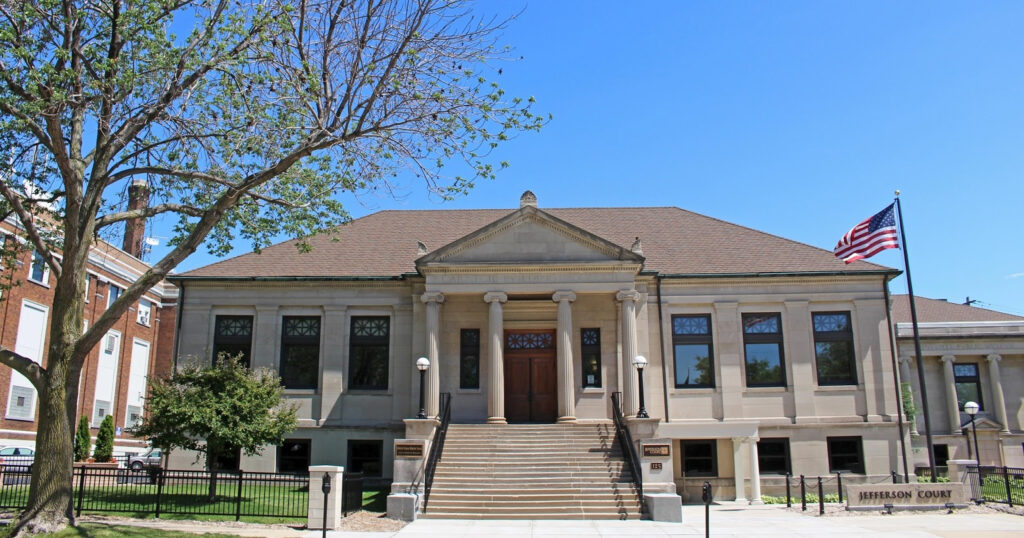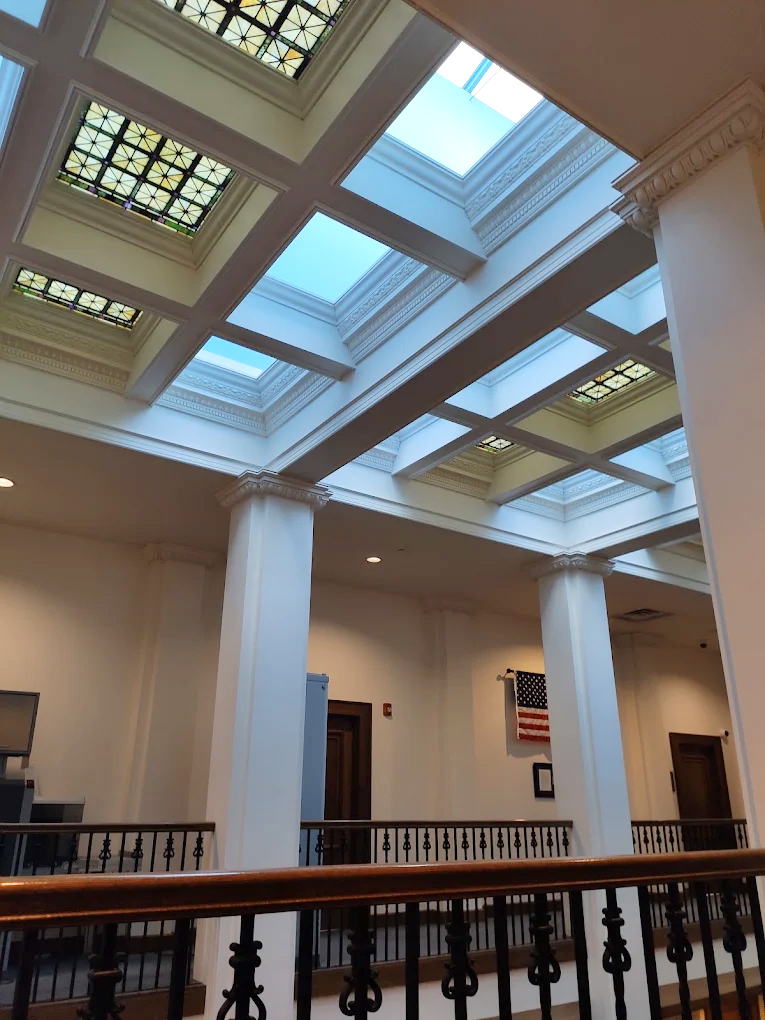
The building at 125 South Jefferson Street in Green Bay opened in 1903 as a Carnegie library, one of the first in Wisconsin. It has been renovated twice since, and today it houses the U.S. District Court for the Eastern District of Wisconsin. It’s on the National Register of Historic Places, and the parts that make it worth keeping are all still there: plaster cornices, coffered ceilings, stained-glass skylights that light the main room the way they did a century ago.
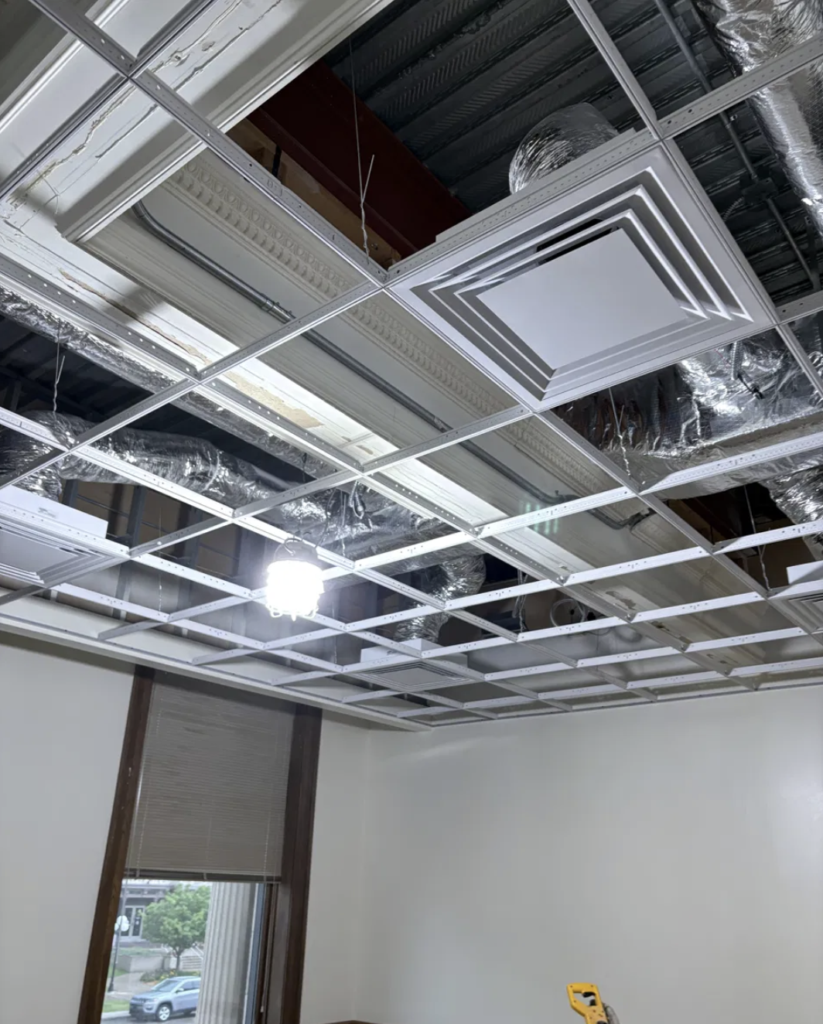
We did the MEPFP engineering for a renovation of the second floor, about 4,000 SF of offices, conference rooms, a courtroom, reception, a restroom and a pantry, with rough-in for a prisoner elevator that will be bid later. New HVAC, plumbing, lighting, power and low voltage. In a new building that’s a straightforward list. In this one, every system had to fit in a ceiling cavity that was already crowded with a hundred and twenty years of structure, and we couldn’t buy room by lowering the ceiling without burying the cornice.
That’s the real difference with historic work. The structure above the ceiling here comes from three different eras, and the clearance changes from one bay to the next. You can’t design to the drawings, because the drawings only tell you what someone intended in 1903 or 1960. You have to go look. So before we drew anything, we surveyed each bay for what was there, how much room was left, and what could be worked around. Then the routing followed the building rather than the plan: duct taking the long way around a beam, pipe and conduit tucked into the gaps that remained, the grid and diffusers held just above the cornice line.
A good share of our effort is negotiation with the architect. Every inch we need for a duct is an inch they lose from the room, and on a job like this they win more of those conversations than they would on a warehouse. They should. The building is the point.
The drawings were done in Revit, and we stayed on through permit, shop drawings, a site visit during construction and the final punch list.
What we like about this kind of work is that when it’s done right, you can’t see any of it. The skylight still lights the room. The courtroom holds temperature in January. The outlets are where the clerks need them. Nobody looks up, and nobody should have to. In a building like this, the best engineering is the kind you never notice.