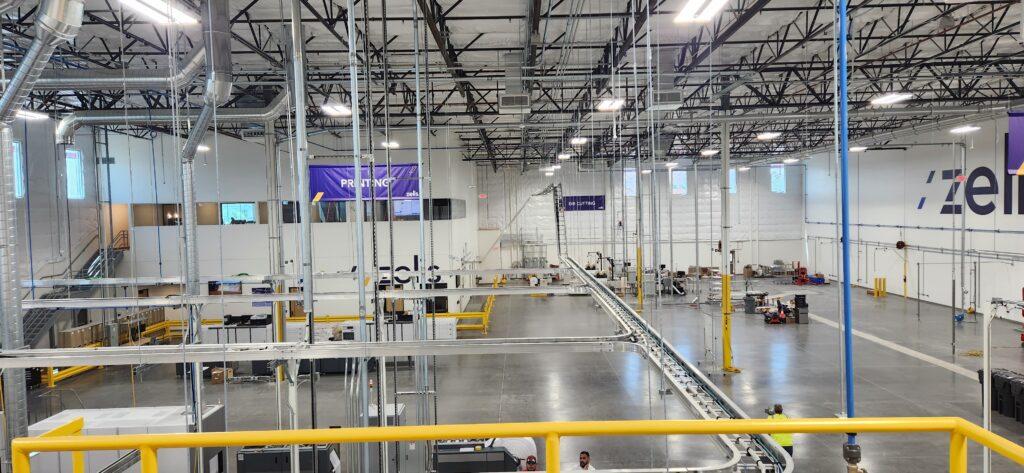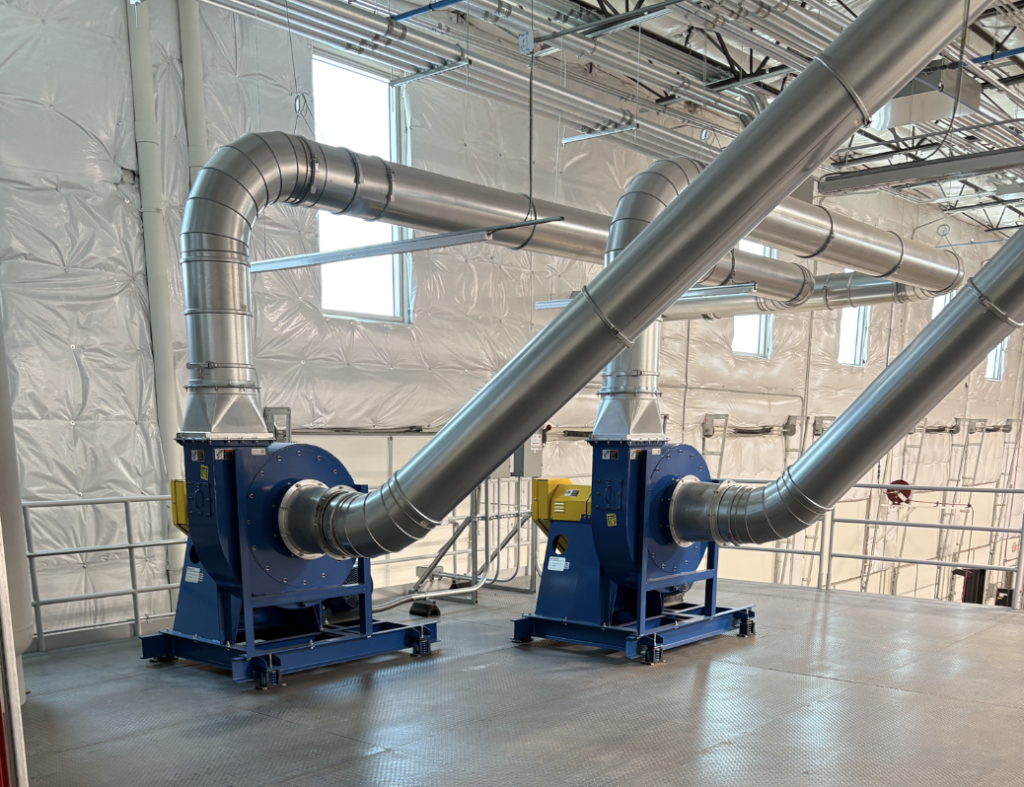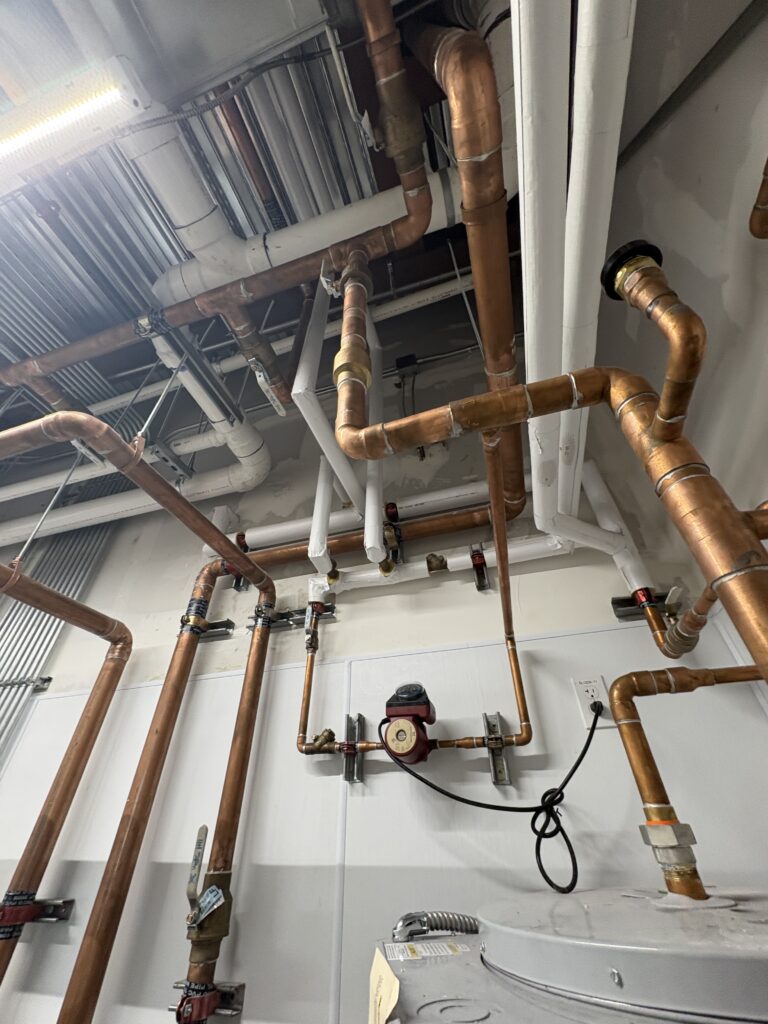
Zelis prints and processes healthcare payments and i.d. cards. A lot of them. The paper coming off their line has to be exact, so the building around the line has to be exact too. The print rooms hold a narrow temperature and humidity band. Dust collection ties into an air-driven conveyor. RO/DI water and compressed air run out to the floor. If any of that drifts, production stops, and production stopping is the one thing a company like Zelis can’t have.
The first plant was an 81,500 SF tenant improvement in Fenton. Zelis hired us for the MEPFP engineering and, under the same agreement, the architecture and structural engineering, so they had one team to call. We laid out the climate control for the print rooms, the dust collection, the process utilities, a generator sized for the whole building, UPS on the critical loads, and controls their facilities people can get into from home when something trips at 2 a.m.
Then they needed a second plant, in Phoenix. They hired a local architect, which made sense. Phoenix has its own code officials, its own contractors, its own way of doing things. Normally that’s the end of the story for the out-of-state engineer. The new architect brings their own consultants, and the owner moves on.
Zelis sent us the engineering anyway. We were already registered in Arizona, so a stamp wasn’t a problem. More to the point, they had a building in Fenton that worked, and they wanted the next one to work the same way. Starting the Phoenix design from Fenton meant the equipment selections, the humidity strategy and the utility routing didn’t have to be argued out a second time. The 49,200 SF space also needed structural engineering, so we picked that up as well, signed, sealed, and coordinated with an architect we were meeting for the first time.
That’s the part worth noticing. Phoenix wasn’t the cheap choice or the easy one for Zelis. An out-of-state engineer working with a new local architect is an extra layer of coordination, and they knew it. They chose it because the first building did what we said it would, and they didn’t want to re-learn that with someone else.
Two plants, two states, 130,700 SF. Same engineers.